2017-06-22 08:39:12 +00:00
# gin-swagger
2017-06-25 09:49:42 +00:00
gin middleware to automatically generate RESTful API documentation with Swagger 2.0.
2021-08-04 20:44:53 +00:00
[](https://travis-ci.com/swaggo/gin-swagger)
2017-07-06 16:57:54 +00:00
[](https://codecov.io/gh/swaggo/gin-swagger)
[](https://goreportcard.com/report/github.com/swaggo/gin-swagger)
2018-01-12 15:34:00 +00:00
[](https://godoc.org/github.com/swaggo/gin-swagger)
2017-06-25 09:49:42 +00:00
## Usage
### Start using it
2018-04-13 18:04:08 +00:00
1. Add comments to your API source code, [See Declarative Comments Format ](https://swaggo.github.io/swaggo.io/declarative_comments_format/ ).
2017-07-06 16:57:54 +00:00
2. Download [Swag ](https://github.com/swaggo/swag ) for Go by using:
2017-06-25 09:49:42 +00:00
```sh
2018-09-19 05:22:14 +00:00
$ go get -u github.com/swaggo/swag/cmd/swag
2017-06-25 09:49:42 +00:00
```
2017-07-06 16:57:54 +00:00
3. Run the [Swag ](https://github.com/swaggo/swag ) in your Go project root folder which contains `main.go` file, [Swag ](https://github.com/swaggo/swag ) will parse comments and generate required files(`docs` folder and `docs/doc.go` ).
2017-06-25 09:49:42 +00:00
```sh
2017-06-25 14:27:03 +00:00
$ swag init
2017-06-25 09:49:42 +00:00
```
2019-06-13 07:24:37 +00:00
4. Download [gin-swagger ](https://github.com/swaggo/gin-swagger ) by using:
2017-12-19 10:24:52 +00:00
```sh
$ go get -u github.com/swaggo/gin-swagger
2019-07-05 14:50:31 +00:00
$ go get -u github.com/swaggo/files
2017-12-19 10:24:52 +00:00
```
And import following in your code:
2017-06-25 09:49:42 +00:00
```go
2017-07-06 16:57:54 +00:00
import "github.com/swaggo/gin-swagger" // gin-swagger middleware
2019-07-05 07:56:58 +00:00
import "github.com/swaggo/files" // swagger embed files
2017-06-25 09:49:42 +00:00
```
### Canonical example:
```go
package main
import (
"github.com/gin-gonic/gin"
2019-07-17 07:42:06 +00:00
swaggerFiles "github.com/swaggo/files"
2020-07-16 10:24:49 +00:00
ginSwagger "github.com/swaggo/gin-swagger"
2020-11-03 10:09:07 +00:00
2019-07-16 09:23:33 +00:00
_ "github.com/swaggo/gin-swagger/example/basic/docs" // docs is generated by Swag CLI, you have to import it.
2017-06-25 09:49:42 +00:00
)
// @title Swagger Example API
// @version 1.0
// @description This is a sample server Petstore server.
// @termsOfService http://swagger.io/terms/
// @contact .name API Support
// @contact .url http://www.swagger.io/support
// @contact .email support@swagger.io
// @license .name Apache 2.0
// @license .url http://www.apache.org/licenses/LICENSE-2.0.html
// @host petstore.swagger.io
// @BasePath /v2
func main() {
r := gin.New()
2019-07-05 07:56:58 +00:00
url := ginSwagger.URL("http://localhost:8080/swagger/doc.json") // The url pointing to API definition
r.GET("/swagger/*any", ginSwagger.WrapHandler(swaggerFiles.Handler, url))
2017-06-25 09:49:42 +00:00
r.Run()
}
2017-06-25 14:27:03 +00:00
```
2020-10-23 18:06:14 +00:00
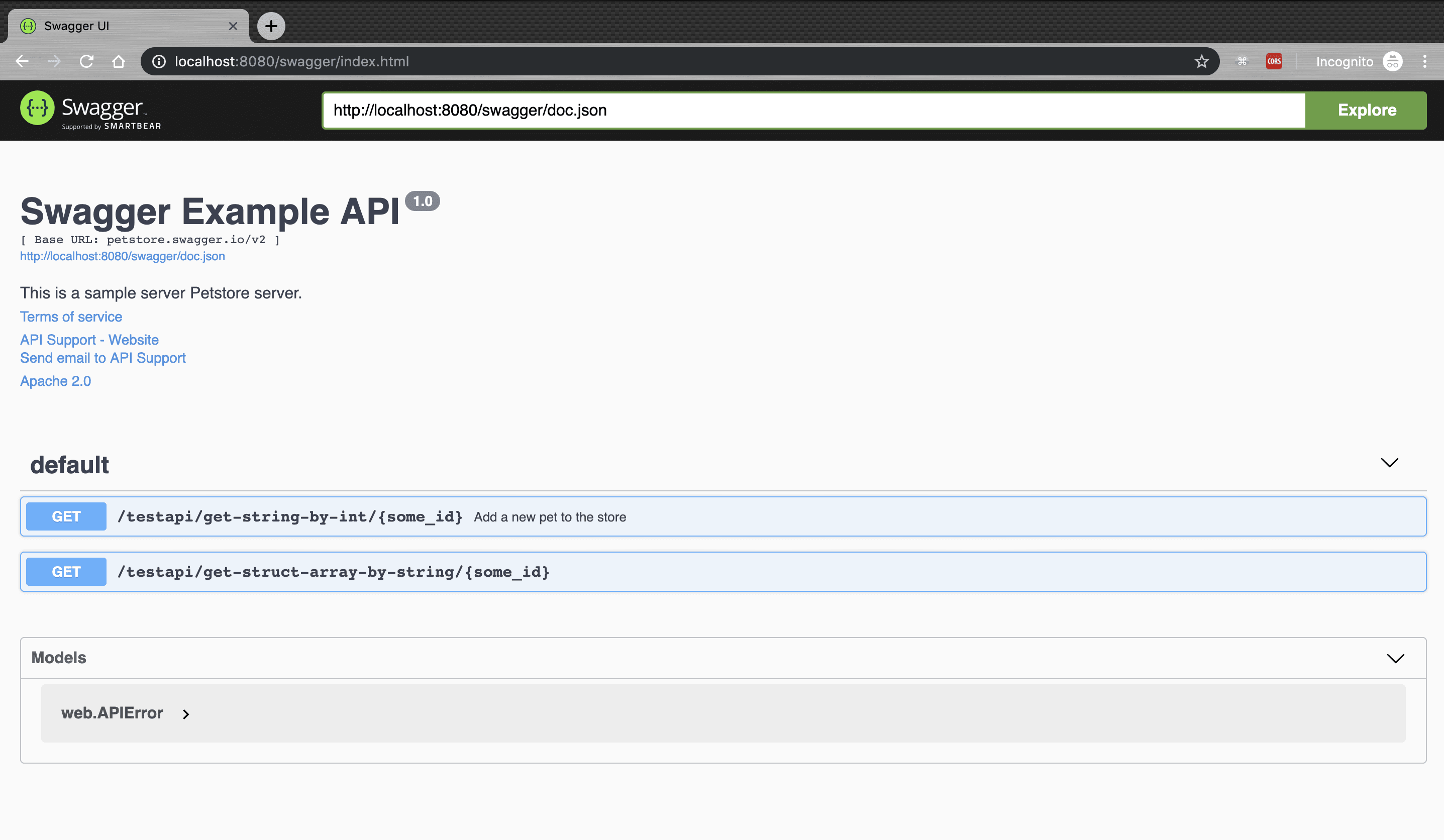
5. Run it, and browse to http://localhost:8080/swagger/index.html, you can see Swagger 2.0 Api documents.
2017-10-26 04:20:17 +00:00
2019-07-05 07:56:58 +00:00
2017-10-26 04:20:17 +00:00
2018-09-26 02:28:12 +00:00
6. If you want to disable swagger when some environment variable is set, use `DisablingWrapHandler`
### Example with disabling:
```go
package main
import (
"github.com/gin-gonic/gin"
2019-07-17 07:42:06 +00:00
swaggerFiles "github.com/swaggo/files"
2020-07-16 10:24:49 +00:00
ginSwagger "github.com/swaggo/gin-swagger"
2020-11-03 10:09:07 +00:00
2020-05-09 17:03:32 +00:00
_ "github.com/swaggo/gin-swagger/example/basic/docs" // docs is generated by Swag CLI, you have to import it.
2018-09-26 02:28:12 +00:00
)
// @title Swagger Example API
// @version 1.0
// @description This is a sample server Petstore server.
// @termsOfService http://swagger.io/terms/
// @contact .name API Support
// @contact .url http://www.swagger.io/support
// @contact .email support@swagger.io
// @license .name Apache 2.0
// @license .url http://www.apache.org/licenses/LICENSE-2.0.html
// @host petstore.swagger.io
// @BasePath /v2
func main() {
r := gin.New()
2020-11-03 10:09:07 +00:00
// use ginSwagger middleware to
2018-09-26 02:28:12 +00:00
r.GET("/swagger/*any", ginSwagger.DisablingWrapHandler(swaggerFiles.Handler, "NAME_OF_ENV_VARIABLE"))
r.Run()
}
```
2020-10-23 18:06:14 +00:00
Then, if you set environment variable `NAME_OF_ENV_VARIABLE` to anything, `/swagger/*any`
2018-09-26 02:28:12 +00:00
will respond 404, just like when route unspecified.


